
Feeding
Dog eating too fast? What a slow feeder bowl does, and what it doesn't
Some dogs empty the bowl before you have straightened up. A slow feeder can slow the eating down. Neither Tufts nor ACVS says it prevents bloat, and it helps to know that before you buy one.
6 min read
On this page
Some dogs eat as if the bowl is about to be taken away. A board-certified veterinary nutritionist at Tufts once timed her own Labrador: half a day's food gone in nineteen seconds, and that was kibble already made extra large to slow her down.
If your dog is the same, the speed is worth slowing down. It is also worth being clear about what a bowl can do and what it can't, because the most serious problem linked to fast eating is not one a bowl addresses.
Why eating fast is a problem
According to Dr. Cailin Heinze, a board-certified veterinary nutritionist writing on Tufts' Petfoodology blog, gobbling food can:
- Raise the risk of choking, and add to the air swallowed with the food, which comes back as burping or gas.
- Lead to vomiting.
- Add weight, if portions aren't measured closely, because a fast eater can take in a lot of calories before the signal that it is full arrives.
- Possibly play a part in bloat. Tufts calls fast eating a possible risk factor for gastric dilatation-volvulus in dogs.
Bloat: the part a bowl can't handle
Gastric dilatation-volvulus, or GDV, is when the stomach fills with food and gas, stretches, and can rotate on itself. The American College of Veterinary Surgeons describes it as rapidly progressive and life-threatening, and says it is commonly associated with eating large meals quickly. It also says the condition is multifactorial. ACVS lists an association with dogs that:
- have a deep chest
- are fed a single large meal once a day
- are older
- are related to dogs that have had it
Raised feeding bowls, large and giant breeds, stress, and a spleen removed in the past have also been suggested as factors. Among the breeds ACVS names are Great Danes, Weimaraners, St. Bernards, and Irish and Gordon setters.
A slow feeder can slow down how fast your dog eats. Tufts calls fast eating a possible risk factor for bloat, but neither Tufts nor ACVS says a slow feeder lowers the risk, and a bowl does nothing about the factors in the list above. If you have a deep-chested dog, there are two conversations to have with your vet, and a bowl replaces neither. One is about meals: since a single large daily meal is on the list, ask whether to split the day's food into smaller meals. The other is about a preventive gastropexy, which ACVS says many veterinary surgeons now recommend for at-risk breeds, and which can often be done at the same time as a spay or neuter.
Go to a vet immediately if your dog is retching without bringing anything up, has a swelling belly, is drooling, keeps standing and stretching or looking at their abdomen, or is panting, weak or collapsing. ACVS lists these as signs of GDV. It is an emergency, and treatment goes best when it starts early.
What a slow feeder does
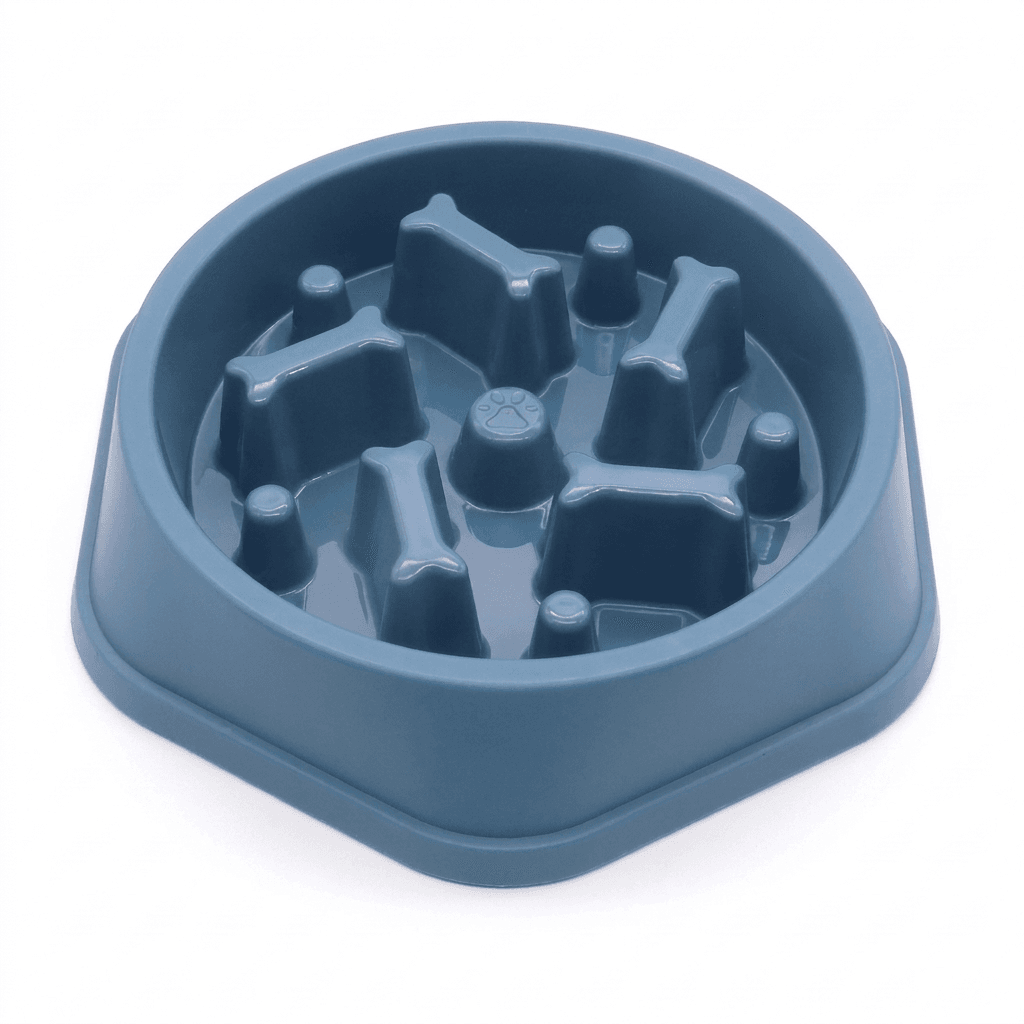
A slow feeder has ridges or a maze molded into the bowl, so your dog has to work food out of the channels instead of taking it in mouthfuls. Tufts lists slow feed bowls first among its ways to slow a pet down. The Labrador from the opening went from nineteen seconds to a little over three minutes for the same meal.
Two things matter more than the pattern:
- It has to stay put. Some slow feeders are designed to slide around as an extra challenge. For a pushy eater on a tiled floor, a bowl with a non-slip base is usually the easier start.
- It has to be the right difficulty. If the maze is so hard your dog gives up, or starts chewing the bowl to get at the food, it is too much. Tufts advises close supervision with feeding toys so pets don't destroy them or try to eat pieces of them, and the same care makes sense with a new bowl. Watch the first few meals.
The three we sell
All three are single bowls with a maze or puzzle pattern inside. The differences are the material, the base and who they suit.
| Slow Feeder Dog Bowl | Slow Feeder Pet Bowl, non-slip | Slow Feeder Pet Bowl, puzzle design | |
|---|---|---|---|
| Made of | Silicone base | Durable plastic | Durable plastic |
| Base | Non-slip | Non-slip | Wide, stable base that helps keep the bowl in place |
| Food | Kibble, wet food, and lick-bowl treats such as yogurt or bone broth | Dry, wet or mixed | Dry, wet or mixed |
| Capacity | About 3/4 cup | Not listed | Not listed |
| Listed for | Dogs | Cats and dogs of various sizes | Cats and dogs of all sizes |
The Slow Feeder Dog Bowl holds about 3/4 cup, so check that against what your dog eats at one meal before you buy it. If your dog eats more, its page says it can also be used as a lick bowl: spread wet food or yogurt into it for something to lick at rather than a full meal.
The non-slip Slow Feeder Pet Bowl has a non-slip base, takes dry, wet or mixed food, and is listed for cats and dogs of various sizes. Its page gives no capacity or dimensions, and the only options are two colors, so if your dog eats more than 3/4 cup at a meal, ask us before you order.
The puzzle-design Slow Feeder Pet Bowl sits on a wide, stable base that its page says helps keep the bowl in place, and takes the same foods. Its page gives no capacity either. Like the non-slip bowl, it is listed for cats as well as dogs.
What about cats?
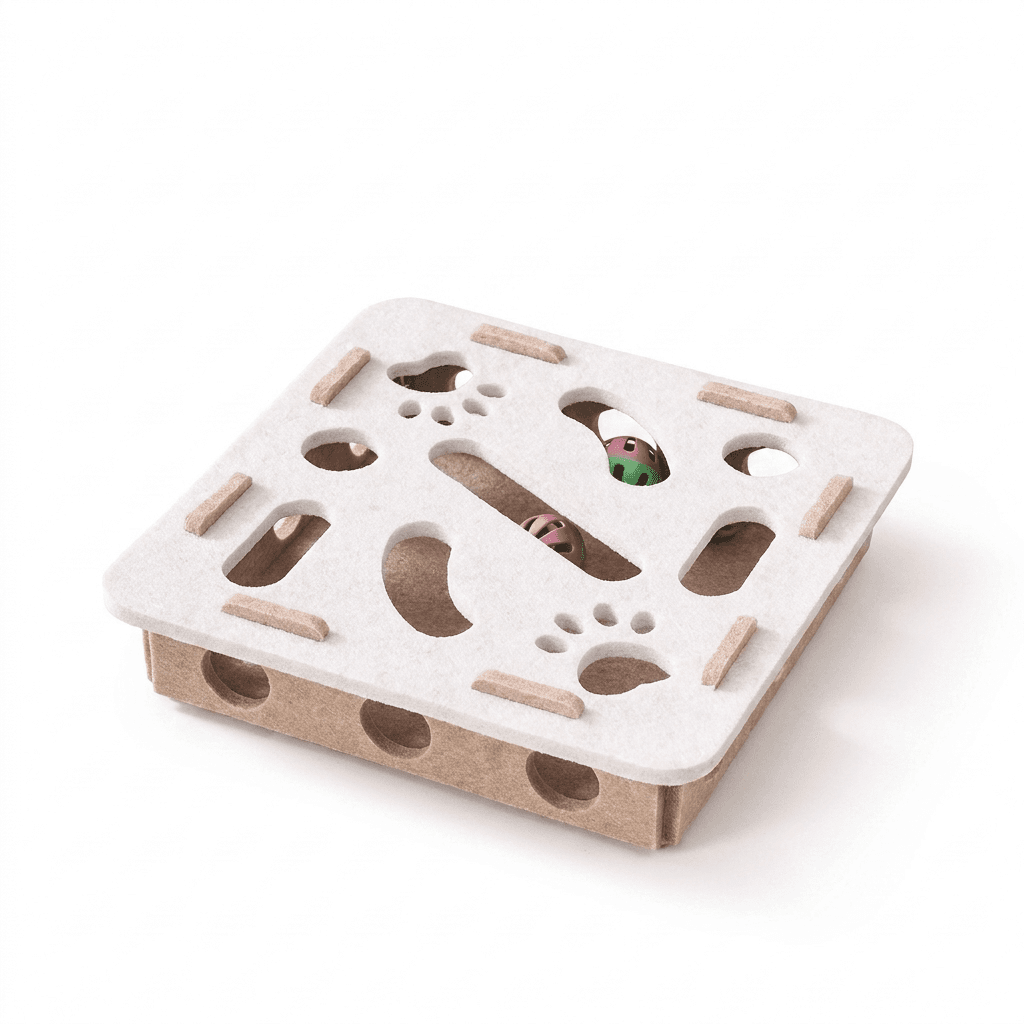
Cats in the wild eat several small meals a day, and hunt for each of them. A review of food puzzles in the Journal of Feline Medicine and Surgery points out that most pet cats get their food from a bowl with almost no effort at all, and recommends puzzles, including stationary ones with channels and wells, as a way to put some of the work back. In one of the cases the authors describe, two sibling cats that were meowing for food and getting in the way at mealtimes ate more slowly once food puzzles were added, along with other changes.
One of their pointers for starting out: at first, getting food out of the puzzle should be as easy as getting it out of the bowl. Fill it generously and make it harder later. With wet food in the wells, a cat has to lick it out, which the authors compare to how cats use their jaws to remove flesh from bone.
Some vomiting is normal in cats, but not all of it. Cornell's Feline Health Center says a cat that vomits more than once a week, or that vomits and is also lethargic, weak, off their food, drinking more, urinating more or less, has diarrhea, or brings up blood, should see a vet promptly, whatever bowl they eat from.
A mat under the bowl
A slow feeder can make a meal messier: kibble gets nosed over the rim and wet food ends up on the floor. A silicone feeding mat under the bowl catches it. Ours has a raised edge for crumbs and spilled water, a non-slip surface that also helps stop the bowl from sliding, and it wipes clean or rinses off.
Other ways to slow a meal down
Tufts also suggests food-dispensing toys, snuffle mats, and hand-feeding part of the day's food. Hand-feeding is easier than it sounds: take a portion of the kibble on the walk and use it as training rewards, a few pieces at a time. A waist-belt treat bag keeps it within reach, with a drawstring closure and a dispenser for poop bags. Take that portion out of the day's meals, so the walk isn't a second dinner.
One thing we left out on purpose: gravity feeders that refill the bowl as your pet eats. They suit some households, but they keep food available all day rather than serving a meal to work through, so they are not in this comparison.
Sources
About this piece. We sell some of the things mentioned here, and we have tried to be straight about when they are not the right choice. Health and safety points follow the sources above. They are general guidance, not veterinary advice about your pet: if something seems wrong, ask your vet.
In this piece
The things we mention
 Slow Feeder Dog Bowl – Slower Mealtimes with Non-Slip Silicone BaseView product
 Slow Feeder Pet Bowl – Controlled Mealtimes with Non-Slip DesignView product
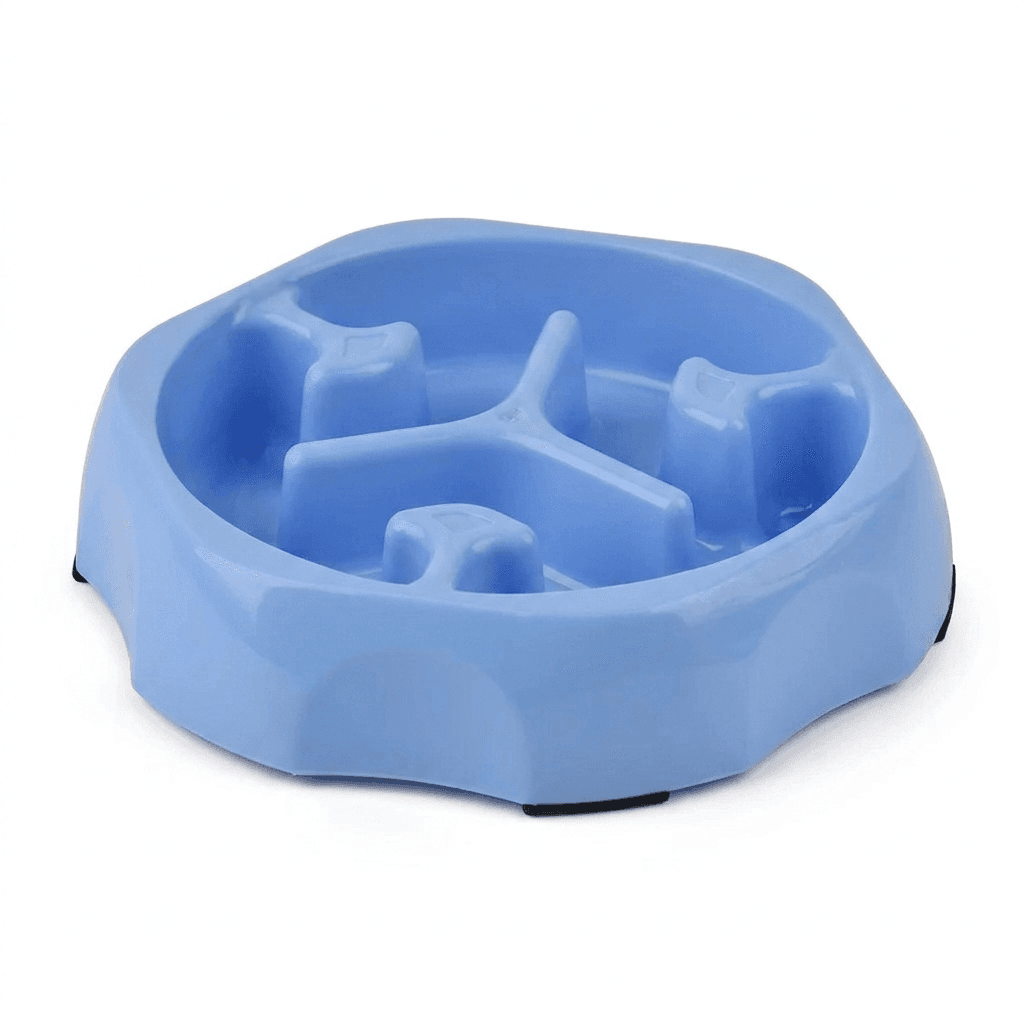 Slow Feeder Pet Bowl – Calm Mealtimes with Durable Puzzle DesignView product
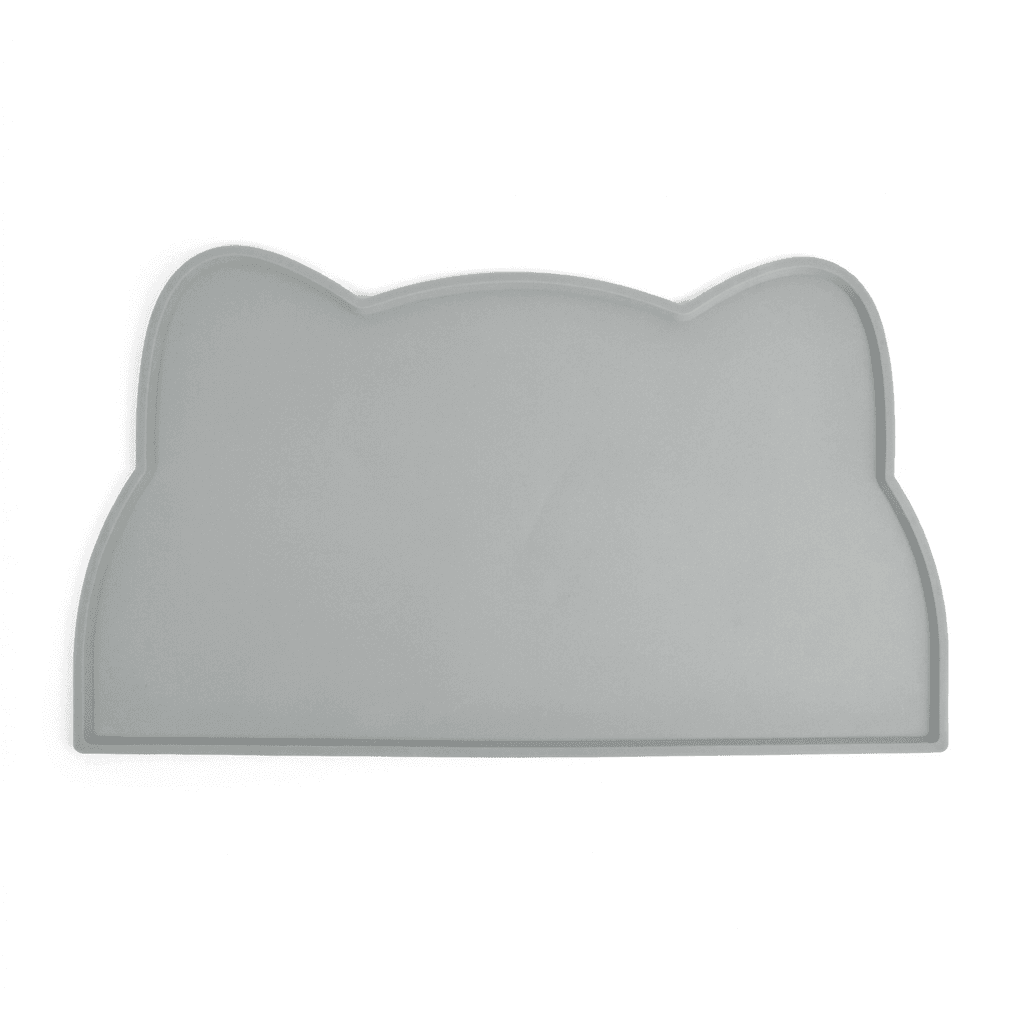 Silicone Pet Feeding Mat – Mess-Free Mealtimes with Waterproof DesignView product
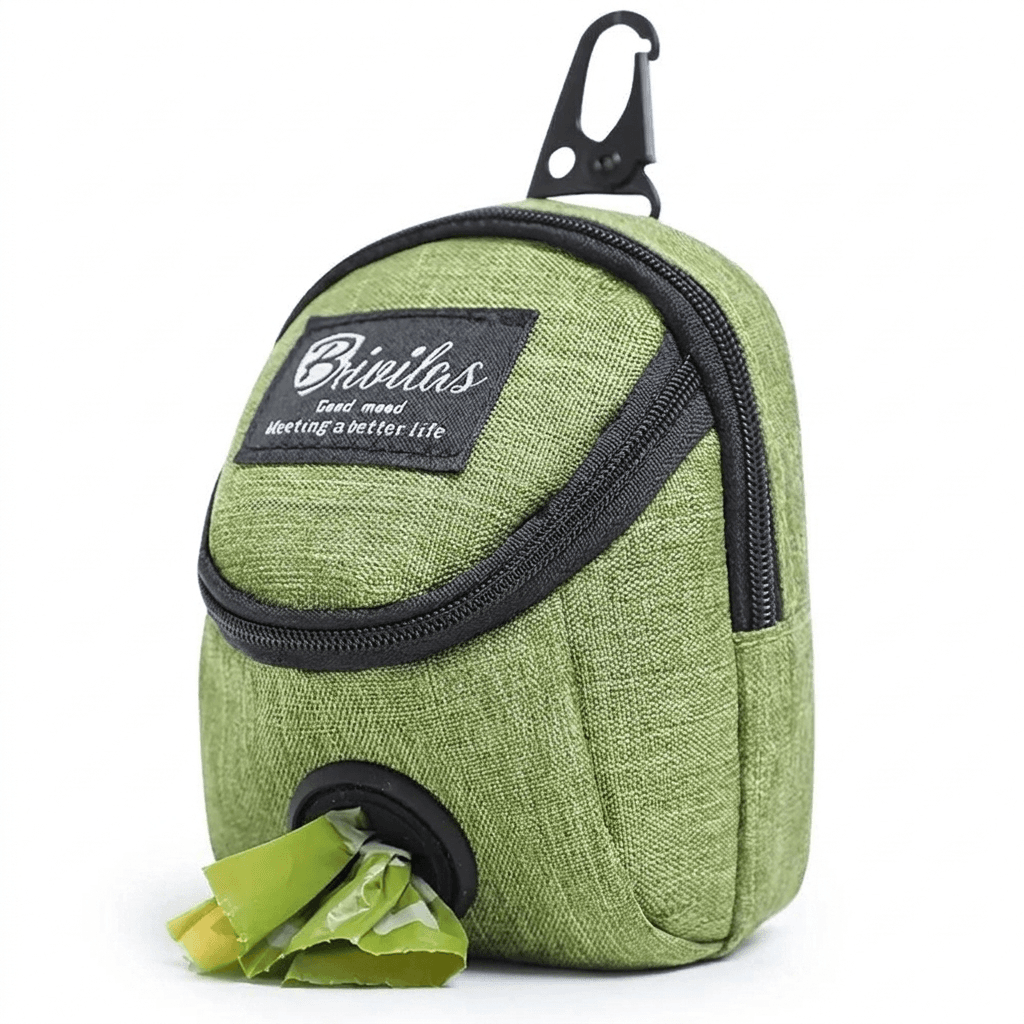 Portable Dog Treat Bag for Hands-Free Training & Walks with Waist BeltView product
Keep reading
More from the journal
Seasonal5 min read
Halloween with a dog or cat: costumes that fit, candy out of reach, and the doorbell
Three things are worth thinking about before Halloween: a costume that fits, candy kept out of reach, and a front door that keeps opening all evening. All three are easy to plan for.
Behavior5 min read
How to stop a cat scratching the furniture (without trying to stop the scratching)
You can't stop a cat scratching, and you shouldn't try. You can change where it happens, and that comes down to what you offer, where you put it, and a little patience.
Home5 min read
Litter all over the floor? How to set up a litter box area that stays tidy
Litter tracking is partly a housekeeping problem and partly a cat problem. Most of the fixes are small changes. A couple of the popular ones make a cat less likely to use the box at all.