
Behavior
How to stop a cat scratching the furniture (without trying to stop the scratching)
You can't stop a cat scratching, and you shouldn't try. You can change where it happens, and that comes down to what you offer, where you put it, and a little patience.
5 min read
On this page
A cat scratching the couch isn't misbehaving. Scratching is normal and it has several jobs. It pulls the worn outer layer off the claws, it leaves the cat's mark, and it is a full-body stretch. The Feline Veterinary Medical Association, formerly the American Association of Feline Practitioners, describes it as normal behavior with a purpose, and says the answer is to give cats suitable places to do it.
The ASPCA starts from the same place: don't try to stop the scratching, teach her where to do it. That is a goal you can meet.
First, look at what your cat is scratching now
The damage already in your home tells you what to buy. Cats have strong preferences, and a scratcher that doesn't match them gets ignored while the couch keeps getting worse.
- Direction: the ASPCA notes that some cats prefer horizontal surfaces, some vertical, some slanted. A cat that shreds the rug is probably a horizontal scratcher. A cat working on the arm of the couch or a door frame is probably a vertical one, reaching up.
- Surface: cardboard, carpet, wood, sisal and upholstery all have fans. Some cats like a grain running up and down for long raking strokes, others one running across for picking.
- Height and stability: every cat wants a scratcher that doesn't shift or collapse when she leans into it, and most like one tall enough to stretch out fully. The ASPCA suggests that may be why cats like drapes so much.
Once you know what your cat prefers, the ASPCA's advice is to provide more of that kind, in several places.
A scratching pad or a tall post
For a vertical scratcher, the ASPCA's general cat care advice is a sturdy post at least three feet high that doesn't wobble, covered in something rough such as sisal, burlap or bark. We don't sell a tall post at the moment, so if the arm of the couch is the target, that is what to look for elsewhere.
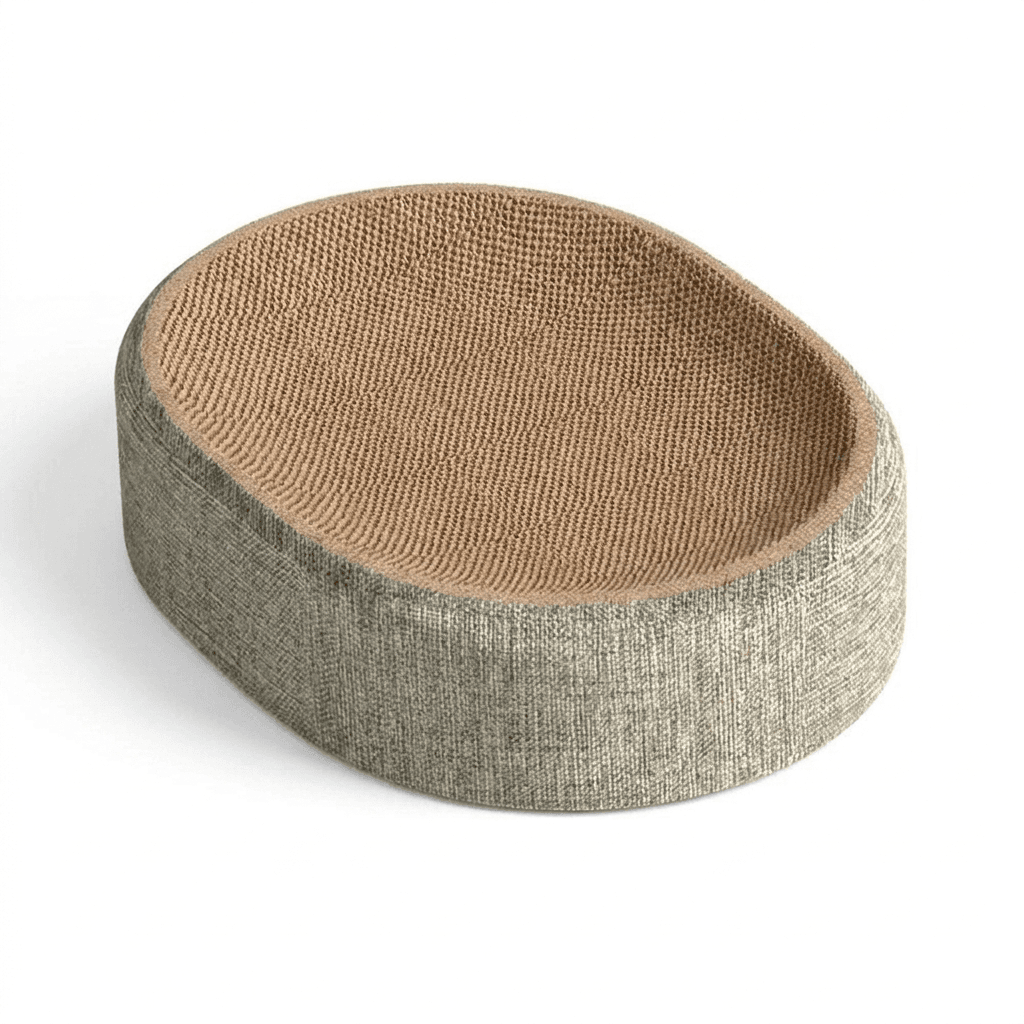
For a floor scratcher, the ASPCA notes that many cats also like scratching pads. Our Oval Sisal Cat Scratcher Bed is a pad and a bed in one: a low-profile, stable oval that sits on the floor.
The FelineVMA points out that cats often stretch and scratch when they wake up, and suggests putting a scratcher near where your cat sleeps. With this one, once she takes to it as a bed, the scratcher is where she wakes up.
Put it where the scratching already happens
A scratcher in a room she doesn't use won't compete with the couch. Both the ASPCA and the FelineVMA say to put scratchers next to, or right in front of, the thing your cat is scratching now, so it becomes the legal alternative in the same spot.
- One next to or in front of the damaged corner of the couch
- One near where your cat sleeps
- More of whatever type she uses most, in the rooms she spends time in
Make the new scratcher interesting. The ASPCA suggests scenting it with catnip and hanging toys on it.
Then reward her for using it. The FelineVMA recommends giving your cat her favorite treat when she scratches the right thing, and if she scratches elsewhere, gently picking her up, taking her to the scratcher, and rewarding her there. It is firm on the other half: cats should be positively reinforced, never punished.
Make the couch less appealing, for now
While the new habit forms, the ASPCA suggests covering the spots your cat likes, or making them unpleasant to use: double-sided sticky tape, plastic, sandpaper, or an upside-down vinyl carpet runner with the knobby side up, on the furniture or on the floor where she stands to scratch. We would keep them on until she uses the scratcher reliably, then try taking them off.
Give her something else to do
The FelineVMA says destructive scratching can happen when a cat's needs aren't being met, and that an enriching environment is part of teaching her to scratch in the right places. Play is one way to meet those needs for an indoor cat.
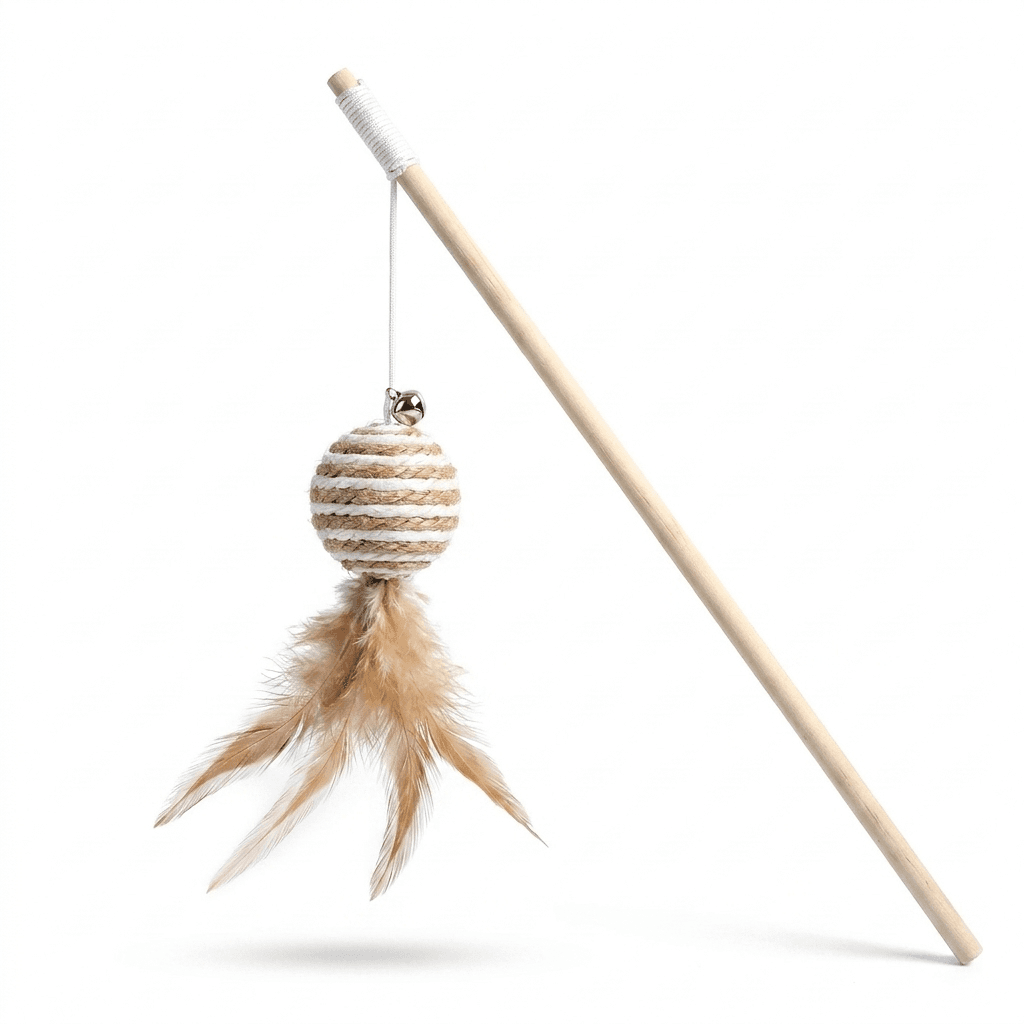
A feather wand gives her a hunt to play at. Ours has a wooden handle, a flexible wand and a feather teaser, for you to move so she can stalk, chase and pounce. Stay with her while she plays, and put it away after each session. The Cornell Feline Health Center lists pieces of string or yarn among the swallowed things that cause vomiting in cats.
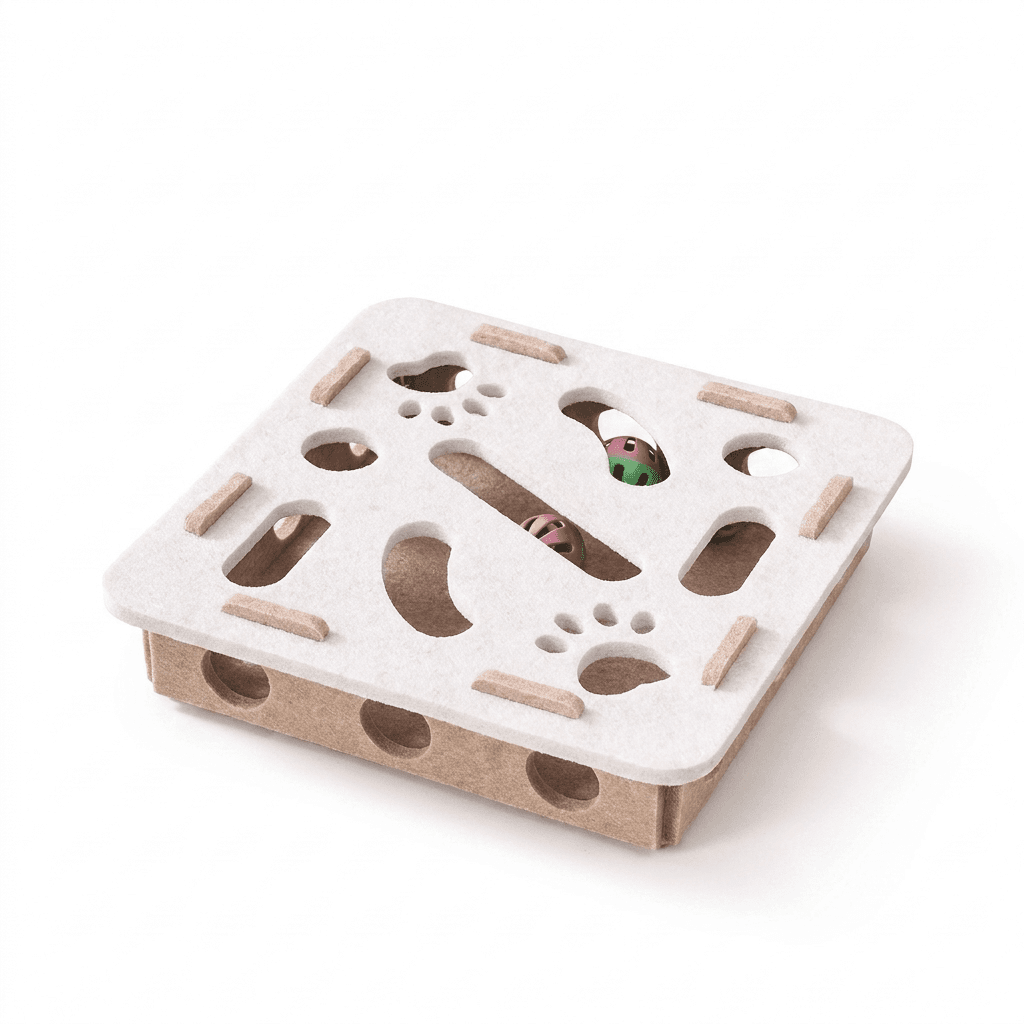
For the hours you aren't there, a felt puzzle box gives her something to bat at on her own. It comes with a ball to bat and chase, and openings to reach into.
Keep the claws trimmed
Blunter claws do less damage while you work on the rest. The ASPCA suggests trimming your cat's nails every two to three weeks. The FelineVMA adds that indoor cats, kittens and older cats need trimming more often than outdoor cats, that proper cat nail trimmers prevent splintering, and that your vet can show you how if your cat is difficult about it.
Plastic nail caps are another option, though the FelineVMA says they may be less desirable than regular trimming, suitable scratchers and enrichment. They are glued over the claws and, according to both the ASPCA and the FelineVMA, last about four to six weeks before they need reapplying.
What not to do
- Don't force her paws onto the scratcher. The ASPCA warns that holding a cat at the post and dragging her claws on it can frighten her into avoiding it, and you.
- Don't throw out a scratcher because it looks shabby. Cats prefer shredded, torn surfaces they can get their claws into, and a used one smells like her. Replace it when it is worn through, not when it stops looking new.
- Don't punish. The FelineVMA says punishment can raise a cat's anxiety and drive more scratching, in the same place or somewhere new. The ASPCA lists a clap or a squirt of water as a last resort and warns your cat may learn to fear you; the FelineVMA says never to punish, so we would skip it.
- Don't declaw. Declawing is the amputation of the last bone of each toe. The FelineVMA calls it elective and not medically necessary in most cases. The ASPCA is strongly opposed and says it has not been proven to help with behavior problems.
If nothing seems to work
The FelineVMA notes that scratching that carries on regardless can be linked to stress, anxiety, attention seeking, or a cat not feeling secure in her home. If nothing here helps, the ASPCA recommends asking for professional help from a Certified Applied Animal Behaviorist or a board-certified veterinary behaviorist.
Sources
About this piece. We sell some of the things mentioned here, and we have tried to be straight about when they are not the right choice. Health and safety points follow the sources above. They are general guidance, not veterinary advice about your pet: if something seems wrong, ask your vet.
Keep reading
More from the journal
Seasonal5 min read
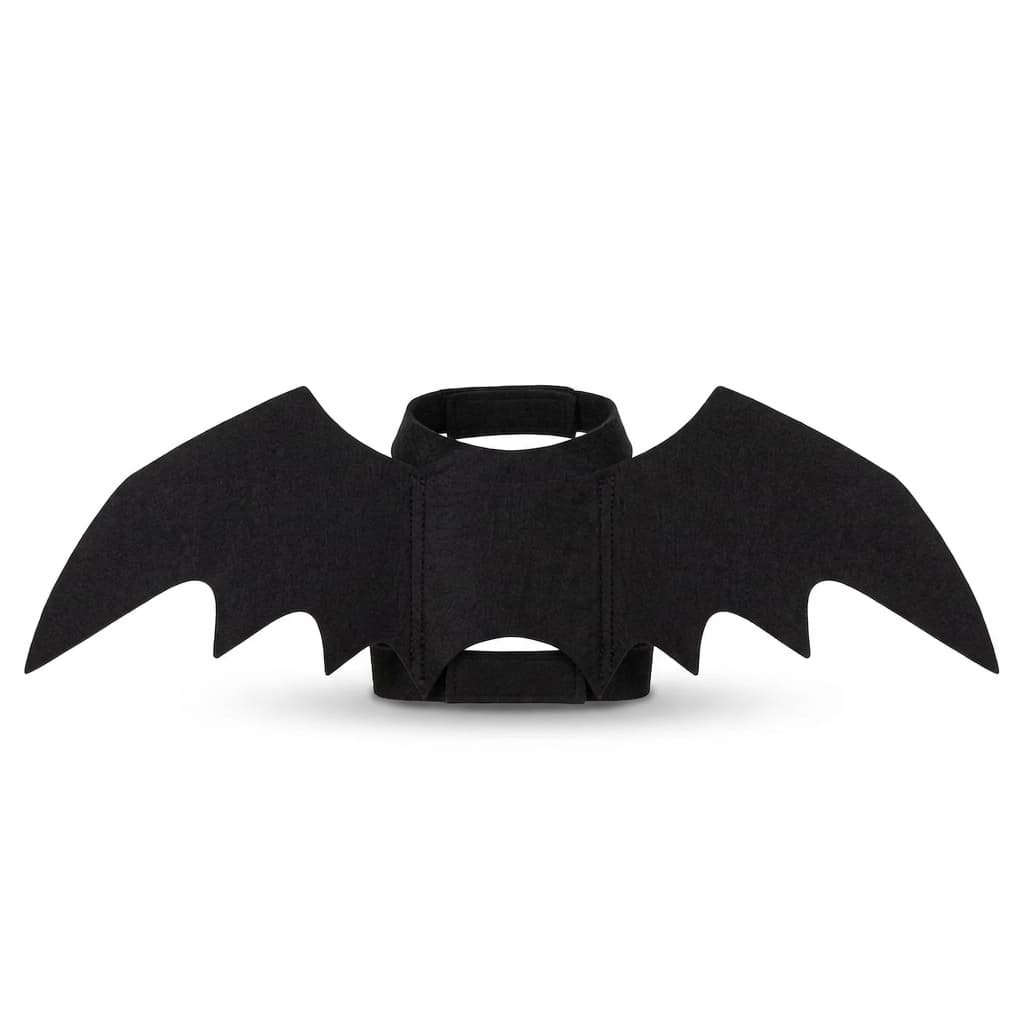
Halloween with a dog or cat: costumes that fit, candy out of reach, and the doorbell
Three things are worth thinking about before Halloween: a costume that fits, candy kept out of reach, and a front door that keeps opening all evening. All three are easy to plan for.
Feeding6 min read
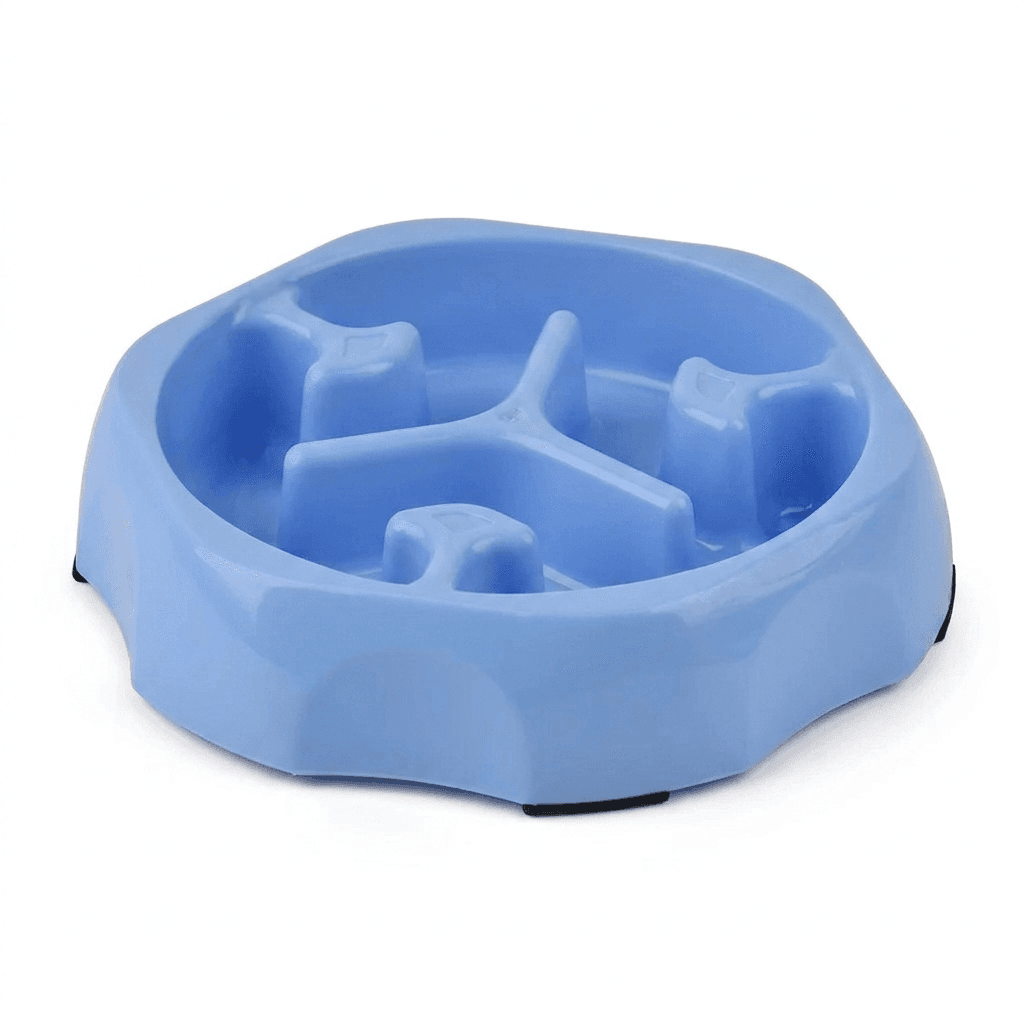
Dog eating too fast? What a slow feeder bowl does, and what it doesn't
Some dogs empty the bowl before you have straightened up. A slow feeder can slow the eating down. Neither Tufts nor ACVS says it prevents bloat, and it helps to know that before you buy one.
Home5 min read
Litter all over the floor? How to set up a litter box area that stays tidy
Litter tracking is partly a housekeeping problem and partly a cat problem. Most of the fixes are small changes. A couple of the popular ones make a cat less likely to use the box at all.